Understanding how rewards are distributed in a blockchain ecosystem is essential for anyone participating in node-based networks. The MST reward model follows a dynamic structure, where rewards decrease as more nodes become active and over time due to halving events.
This blog explains how MST node rewards work and what participants should expect in the long run.
Current Reward Scenario
At present, rewards are relatively high because the network is still in its early growth phase.
For example:
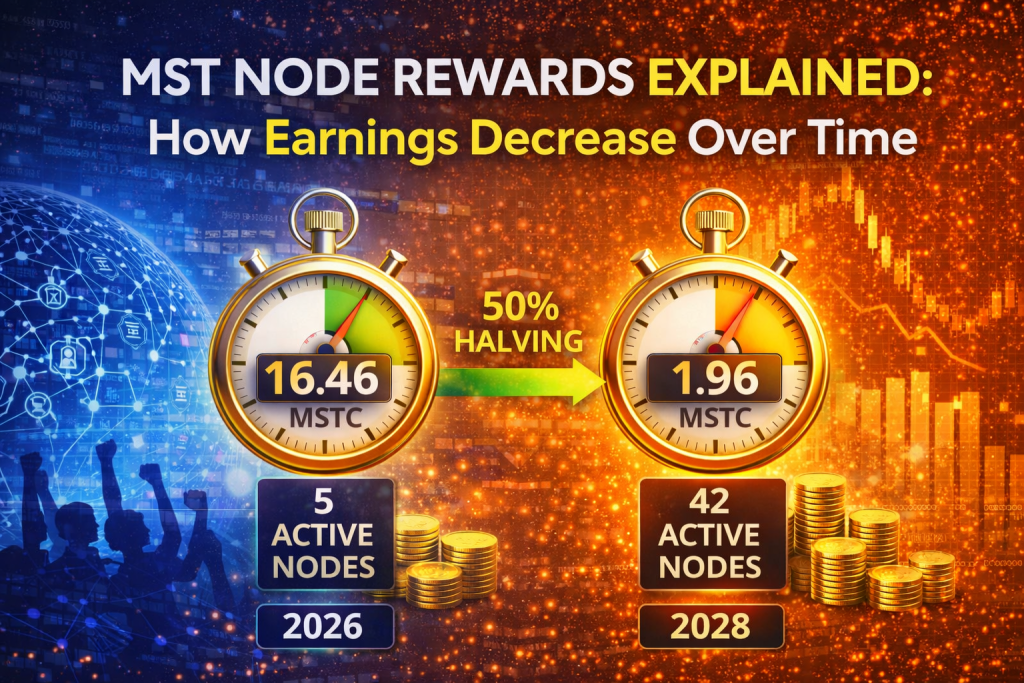
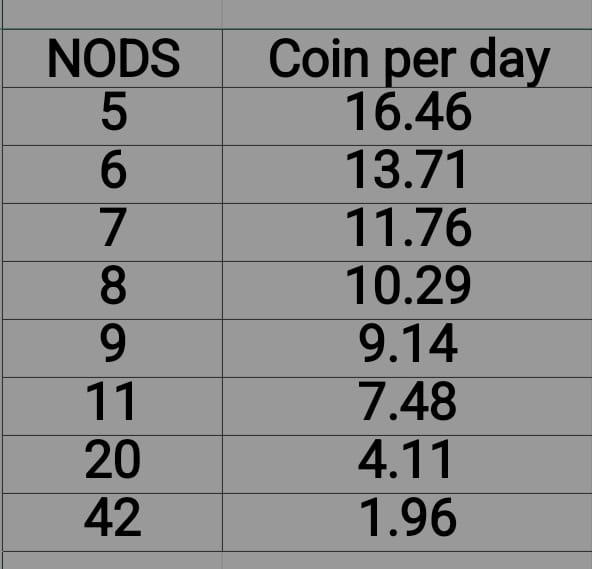
- At the 5th active node, the reward is approximately 16.46 MSTC per day (per fraction)
This higher reward phase exists because fewer nodes are sharing the total reward pool.
Impact of Increasing Active Nodes
As more nodes join the network, the total reward gets distributed among a larger number of participants.
This means:
- Rewards gradually decrease as node count increases
- Once all nodes are active, the reward stabilizes at a lower level
For instance:
- When all nodes become active → rewards reduce to around 1.96 MSTC per day (per fraction)
Effect of First Halving (November 2026)
The MST ecosystem follows a halving mechanism, where rewards are reduced periodically to control supply.
From November 8, 2026:
- Daily reward reduces from 1.96 MSTC → 0.98 MSTC
Monthly estimate:
- 0.98 × 30 ≈ 29.4 MSTC per month
This marks the first major drop in earning rates.
Second Halving (November 2028)
After 2 years, another halving event occurs:
- 0.98 MSTC → 0.49 MSTC per day
Monthly estimate:
- 0.49 × 30 ≈ 14.7 MSTC per month
This pattern continues every 2 years, gradually reducing rewards.
Long-Term Reward Structure (Till 2044)
The MST reward system is designed for long-term sustainability, with rewards continuing until around 2044.
Key highlights:
- Rewards decrease every 2 years (halving cycle)
- Early participants receive higher rewards
- Later stages offer lower but more stable distribution
Why Rewards Decrease Over Time
This model is based on fundamental blockchain economics:
1. Supply Control
Reducing rewards limits the number of new coins entering circulation.
2. Early Participation Advantage
Higher rewards in early phases encourage network growth.
3. Long-Term Sustainability
Gradual reduction ensures the ecosystem remains balanced over time.
Important Insight: First Halving is Crucial
A significant point to understand:
- Around 50% of total supply is distributed before the first halving
- The remaining 50% takes nearly 18 years to be released
This highlights why early phases show higher reward potential compared to later stages.
Things to Keep in Mind
While this reward model provides a clear structure:
- Actual earnings may vary based on network conditions
- Participation should be based on understanding, not assumptions
- Blockchain systems evolve, and external factors can influence outcomes
Conclusion
The MST node reward system is designed with a long-term vision, balancing early incentives with sustainable growth. As more nodes join and halving events occur, rewards naturally decrease, making early participation phases more rewarding.
Understanding this mechanism helps participants make informed decisions and align their expectations with the network’s long-term roadmap.