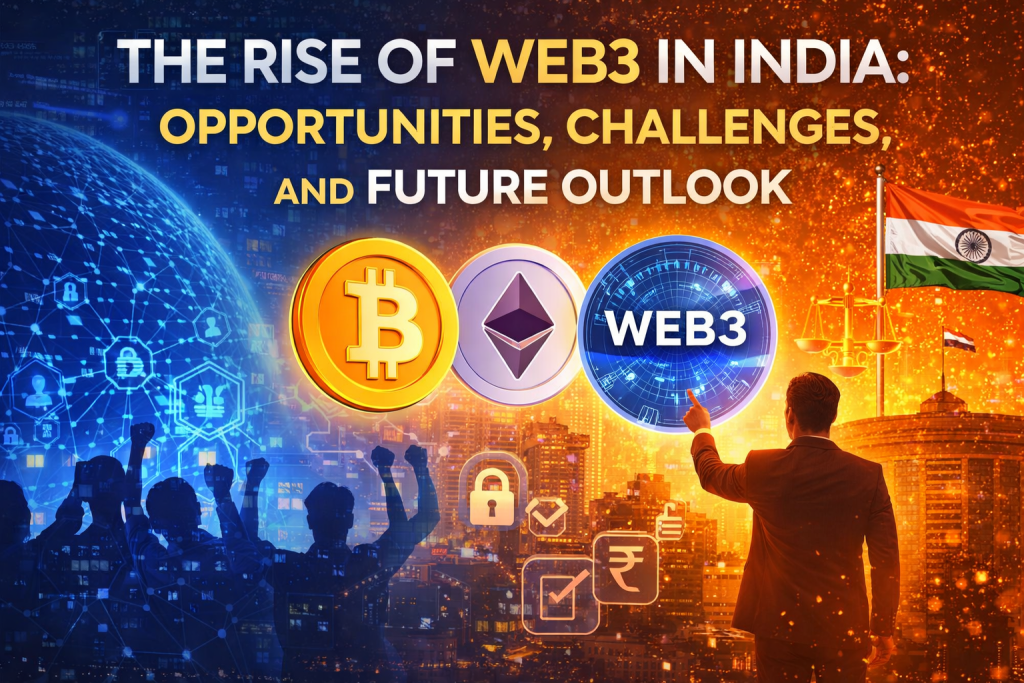
India is witnessing a rapid shift toward the next generation of the internet—Web3. Built on blockchain technology, Web3 represents a decentralized digital ecosystem where users have control over their data, assets, and online identity. As global adoption accelerates, India is emerging as a significant player in this transformation, driven by its large developer base, growing startup ecosystem, and increasing digital awareness.
What is Web3 and Why It Matters
Web3 is the evolution of the internet from centralized platforms to decentralized networks. Unlike traditional Web2 systems, where large corporations control data and services, Web3 empowers users through blockchain-based applications.
Key features of Web3 include:
- Decentralization
- Digital ownership through tokens and NFTs
- Smart contracts for automation
- Transparent and secure transactions
This shift is not just technological—it is redefining how individuals interact, transact, and create value online.
Opportunities for India in the Web3 Era
India has a unique advantage in the Web3 space due to its strong tech talent and digital-first population. The rise of Web3 is opening multiple opportunities across sectors.
1. Innovation and Startups
India is becoming a hub for Web3 startups building decentralized applications (dApps), DeFi platforms, and blockchain solutions.
2. Employment and Skill Development
Web3 is creating new career paths such as blockchain developers, smart contract engineers, and crypto analysts, offering global opportunities for Indian youth.
3. Financial Inclusion
Decentralized finance (DeFi) can provide financial services to unbanked populations, improving accessibility and reducing dependency on traditional systems.
4. Digital Asset Economy
Web3 enables ownership of digital assets, opening new revenue streams for creators, gamers, and investors.
Challenges Slowing Down Adoption
Despite its potential, Web3 adoption in India faces several challenges that need to be addressed.
Regulatory Uncertainty
Lack of clear policies around cryptocurrency and digital assets creates confusion for startups and investors.
Limited Awareness
A large portion of the population still lacks understanding of blockchain and Web3 technologies.
Infrastructure and Scalability
Building scalable and user-friendly Web3 applications remains a technical challenge.
Market Volatility
The fluctuating nature of crypto markets can discourage new participants.
India’s Growing Web3 Ecosystem
India’s Web3 ecosystem is expanding rapidly, supported by:
- A strong community of developers
- Increasing venture capital interest
- Global collaborations and partnerships
Indian developers are among the largest contributors to global Web3 projects, highlighting the country’s growing influence in this space.
Future Outlook: What Lies Ahead
The future of Web3 in India looks promising as both government and private sectors continue to explore its potential. With better regulatory clarity and increased awareness, Web3 adoption is expected to accelerate.
Key trends to watch:
- Integration of Web3 with AI and emerging technologies
- Growth of decentralized applications (dApps)
- Expansion of digital identity solutions
- Tokenization of real-world assets
These developments will play a crucial role in shaping India’s digital economy.
Conclusion
The rise of Web3 in India marks the beginning of a new digital era—one that prioritizes decentralization, transparency, and user empowerment. While challenges remain, the opportunities far outweigh the risks.
For developers, entrepreneurs, and investors, this is the right time to explore and engage with Web3 technologies. As India continues its journey toward digital transformation, Web3 will be a key driver in building a secure, inclusive, and future-ready digital ecosystem.