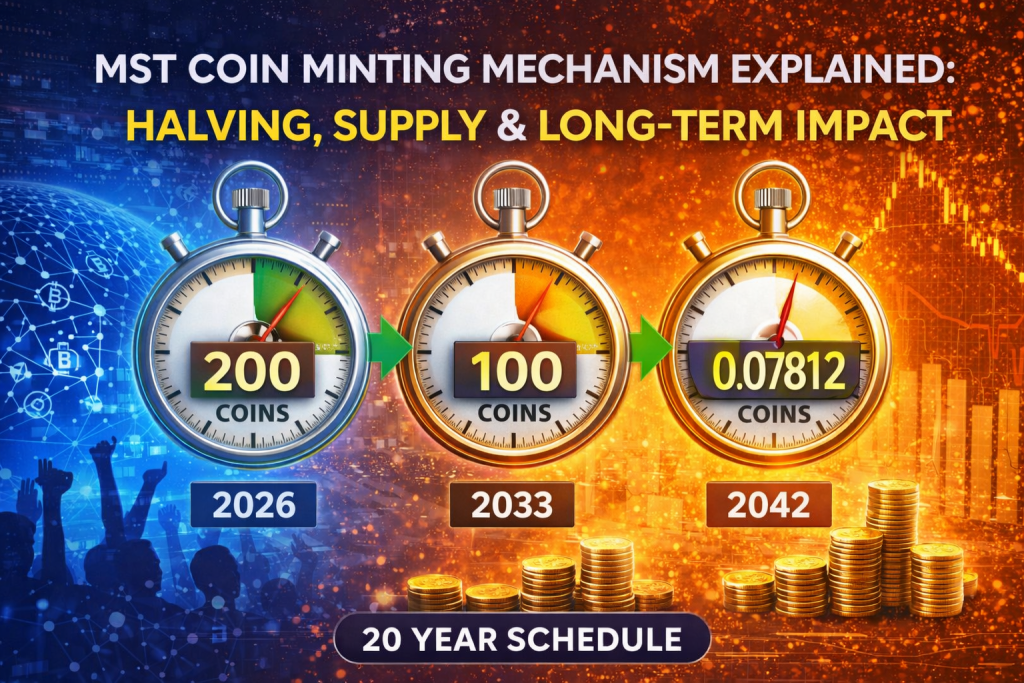
Blockchain-based ecosystems often rely on structured token minting mechanisms to ensure sustainability, scarcity, and long-term value. The MST coin mining model follows a gradual reduction (halving) system, similar to leading blockchain networks, designed to control supply over time.
This blog explains how MST coin minting works, its long-term roadmap, and why understanding this mechanism is important.
Current Minting Rate Explained
At present, the MST network is generating coins at a fixed interval:
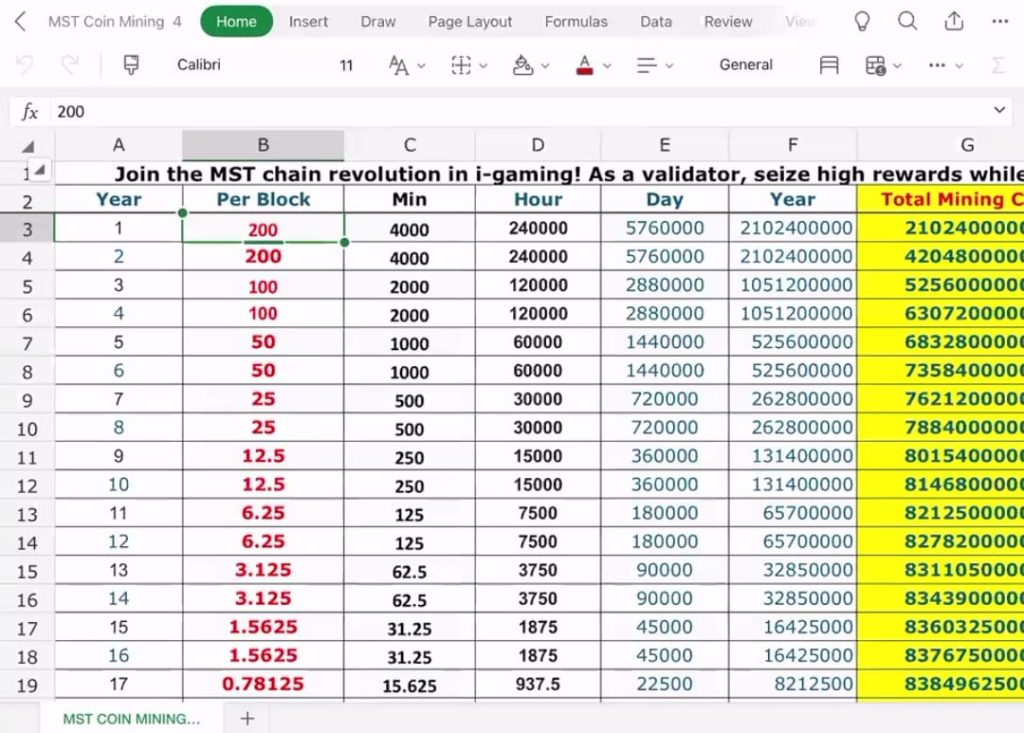
- Every 3 seconds: 200 coins
- Per minute: 4,000 coins
- Per hour: 240,000 coins
- Per day: 5,760,000 coins
This minting rate is scheduled to continue until November 7, 2026.
What is Halving in MST Blockchain?
Starting November 8, 2026, the network will undergo its first halving event, where the minting rate will reduce by 50%.
This means:
- 200 coins per 3 seconds → 100 coins per 3 seconds
Halving is a crucial concept in blockchain economics. It reduces the rate at which new coins enter circulation, helping maintain scarcity and potentially supporting long-term value.
Long-Term Minting Schedule
The MST minting system follows a halving cycle every 2 years, gradually decreasing the number of coins generated.
Over time, this leads to:
- Reduced daily coin supply
- Increased scarcity
- More controlled token distribution
By the year 2042, after the final halving:
- Every 3 seconds: ~0.078 coins
- Per hour: ~937.5 coins
- Per day: ~22,500 coins
This marks a significant drop from current levels, highlighting the long-term supply control mechanism.
Why This Mechanism Matters
Understanding the minting and halving structure is important for anyone participating in the ecosystem. It helps in:
1. Better Decision Making
Participants can plan their involvement based on long-term supply trends.
2. Understanding Scarcity
As minting decreases, availability of new coins reduces, which may impact demand and value.
3. Long-Term Vision
The 20-year roadmap reflects a structured and predictable system rather than random supply.
The Role of Supply Control in Blockchain
Supply management is one of the core principles of blockchain economics. A decreasing supply over time:
- Prevents inflation
- Encourages early participation
- Supports ecosystem stability
This approach has been successfully used in many blockchain networks to maintain balance between supply and demand.
Important Considerations
While the minting model provides a structured roadmap, it is important to remember:
- Blockchain ecosystems evolve over time
- Market conditions can influence outcomes
- Participation decisions should be based on research and understanding
The minting chart serves as a guideline to understand the mechanism, not a guarantee of future returns.
Conclusion
The MST coin minting mechanism is designed with a long-term vision, using a halving-based model to gradually reduce supply over a 20-year period. Starting from high minting rates today to significantly lower levels by 2042, the system emphasizes scarcity, sustainability, and structured growth.
For anyone exploring blockchain ecosystems, understanding such mechanisms is essential. It not only provides clarity on how the system works but also helps in making informed decisions aligned with long-term trends.